
News
Critical Setback in NASA's Lunar Ambitions
NASA's ambitious return to the moon has hit a snag, with the Artemis II mission now targeted for March following technical issues during a vital pre-launch test. This delay underscores the challenges of space exploration but highlights the agency's commitment to safety and success in advancing America's leadership in space.
The problems emerged during a wet dress rehearsal at Kennedy Space Center, a comprehensive simulation of launch procedures. Engineers encountered a persistent hydrogen leak in the system that feeds cryogenic propellant into the rocket's core stage. This issue, reminiscent of challenges faced in previous tests, forced the team to halt the countdown short of completion.
Details of the Fueling Test Challenges
The test began with loading over 700,000 gallons of super-cold hydrogen and oxygen into the 322-foot Space Launch System rocket. Just hours in, excessive hydrogen buildup near the rocket's base prompted pauses in the operation. Techniques developed from the 2022 uncrewed flight were employed, but a spike in the leak rate triggered an automatic stop at the five-minute mark.
Additional complications included communication dropouts and the need to retorque a valve on the Orion crew module hatch. Cold weather from a recent arctic outbreak further complicated matters, delaying the start as interfaces needed time to reach acceptable temperatures. These factors combined to cut the rehearsal short, preventing a full switch to internal power and pressurization.
Despite these hurdles, NASA successfully filled the tanks in both the core stage and the interim cryogenic propulsion stage. The agency views this as progress, emphasizing that such rehearsals are designed to identify and resolve issues before actual flight.
Impact on Mission Timeline and Crew
Originally set for a February window shortened by cold weather to run through February 11, the mission must now wait until at least March. Possible launch dates include March 6 through 9 and March 11, with April as a backup if needed. This shift allows time for analysis, repairs, and another wet dress rehearsal.
The four astronauts—commander Reid Wiseman, pilot Victor Glover, mission specialist Christina Koch from NASA, and Jeremy Hansen from the Canadian Space Agency—had been in quarantine since January 21 in Houston. They monitored the test remotely but have now been released, with plans to re-enter quarantine about two weeks before the new launch date. Their arrival at Kennedy Space Center, planned for this week, has been postponed.
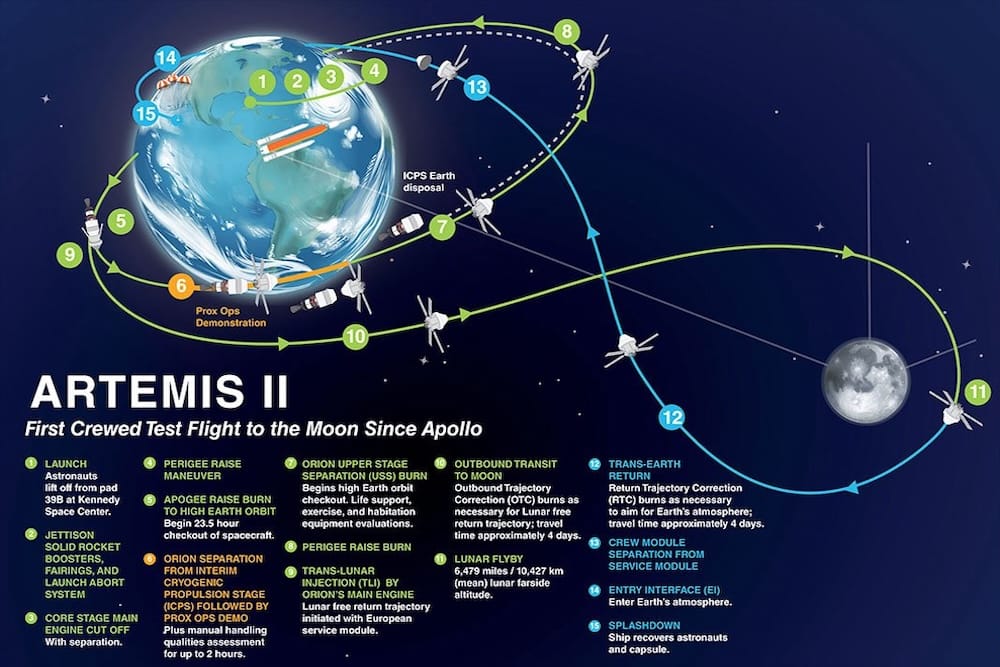
This crew represents a milestone as the first to fly the Orion spacecraft, testing its life support systems on a 10-day journey past the moon's far side and back to Earth without orbiting or landing. Their success will pave the way for future lunar landings and a sustained American presence on the moon.
Leadership and Response to the Delay
NASA Administrator Jared Isaacman addressed the situation on X, stating, 'With more than three years between Space Launch System rocket launches, we fully anticipated encountering challenges. That is precisely why we conduct a wet dress rehearsal.' He emphasized that these tests surface issues to ensure the highest probability of success on launch day.
Isaacman added, 'As always, safety remains our top priority, for our astronauts, our workforce, our systems, and the public.' He noted plans for an additional rehearsal before targeting March, reinforcing that NASA will launch only when fully ready for this historic mission.
The administration's support for NASA's efforts reflects a strong commitment to reclaiming America's dominance in space exploration. By prioritizing thorough preparation over rushed timelines, the team ensures reliable technology for future endeavors, including eventual Mars missions.
Historical Context and Future Implications
This is not the first time hydrogen leaks have plagued the program. The 2022 Artemis I uncrewed flight faced similar issues, delaying it by six months. Liquid hydrogen's tricky nature—extremely cold and prone to escaping seals—demands precise handling, which NASA continues to refine.
The Artemis program builds on the Apollo legacy, aiming for sustained lunar exploration. Unlike Apollo's brief visits, Artemis seeks ongoing presence, potentially extracting resources like water ice for fuel and life support. This delay, while disappointing, is a prudent step to avoid risks and ensure mission objectives are met.
As NASA analyzes data from the test, a news conference is scheduled to discuss findings. The extra time will allow engineers to investigate the leak's source, possibly at the launch pad or back in the Vehicle Assembly Building if a rollback is needed.
Broader Significance for American Space Efforts
The Artemis II mission is a key precursor to landing astronauts on the moon, the first since 1972. It will venture farther than any human has before, testing systems crucial for deep space travel. Success here strengthens America's position in global space activities, fostering innovation and international partnerships like with Canada.
Under current leadership, NASA is pushing boundaries while maintaining fiscal responsibility and safety standards. This approach aligns with values of perseverance and excellence, ensuring that when Americans return to the moon, it's with technology that's proven and reliable.
While the delay pushes back this exciting chapter, it demonstrates wise stewardship of resources and personnel. The nation looks forward to March, when Artemis II could finally lift off, marking a proud moment in our spacefaring history.
Join the American Association of Retired Republicans today!
Dues are $12 per year. Member benefits:
✅ Ad-Free Website Viewing
✅ Advocacy for Republican Seniors
✅ 120+ Senior Discounts
✅ Member Only Newsletters
Dues are $12 per year. Member benefits:
✅ Ad-Free Website Viewing
✅ Advocacy for Republican Seniors
✅ 120+ Senior Discounts
✅ Member Only Newsletters