
News
Preparing for a Historic Launch
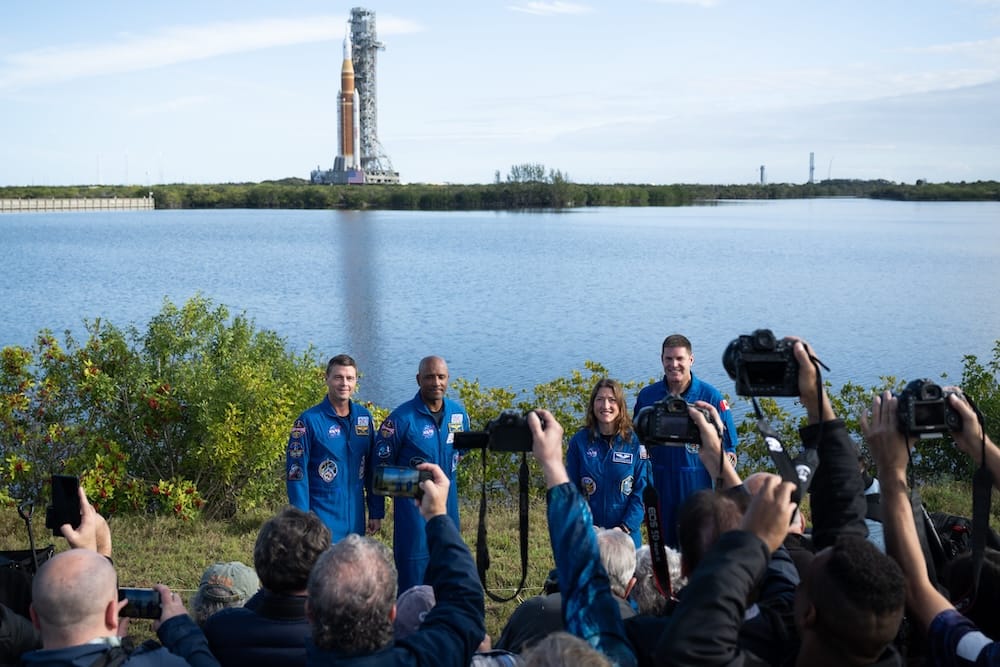
NASA is gearing up for a major milestone in space exploration with the Artemis II mission. This will be the first time in over 50 years that humans will venture around the moon in a crewed spacecraft. The Space Launch System rocket, a powerful vehicle designed to carry astronauts beyond Earth's orbit, stands ready at Kennedy Space Center. Engineers have been working tirelessly to ensure everything is set for the upcoming launch. The mission aims to test systems critical for future lunar landings.
The crew consists of experienced astronauts who bring a wealth of knowledge to this endeavor. Reid Wiseman, Victor Glover, Christina Koch from NASA, and Jeremy Hansen from the Canadian Space Agency make up the team. Their journey will last about 10 days, looping around the moon and returning to Earth. This flight will push the boundaries of human space travel farther than ever before in a crewed capsule. Preparations have included rigorous training and simulations to handle any challenges that might arise.
The Space Launch System Rocket
The rocket at the heart of this mission is the Space Launch System, often called SLS. It's the most powerful rocket NASA has built, capable of lifting heavy payloads into deep space. Fueled by over 700,000 gallons of liquid oxygen and hydrogen, it also features two solid rocket boosters similar to those used in the space shuttle program. These components work together to provide the thrust needed to escape Earth's gravity. The orange and white structure is an impressive sight on the launch pad.
Testing has been extensive to verify the rocket's reliability. Recent checks have confirmed that all systems are go for the planned liftoff. NASA officials have expressed confidence in the technology, drawing from lessons learned in previous uncrewed tests. The SLS represents a new era in American space capabilities, built with contributions from various industry partners. This launch will demonstrate the nation's commitment to leading in space exploration.
One key aspect is the integration of the Orion spacecraft atop the rocket. Orion is designed to keep the crew safe during the high-speed journey and reentry. It includes advanced life support systems and radiation protection. The combination of SLS and Orion forms the backbone of the Artemis program, aimed at sustainable lunar presence.
The Crew and Their Journey
The four astronauts selected for Artemis II have diverse backgrounds that strengthen the mission. Reid Wiseman, the commander, has prior spaceflight experience and leadership skills. Victor Glover brings expertise from his time on the International Space Station. Christina Koch holds the record for the longest single spaceflight by a woman, adding valuable insights. Jeremy Hansen represents international collaboration, as Canada contributes to the program.
Their path will take them on a free-return trajectory around the moon, without landing. This allows testing of navigation, communication, and propulsion in deep space. The crew will travel hundreds of thousands of miles, experiencing views of the moon's far side. Upon return, they'll splash down in the Pacific Ocean, where recovery teams will assist. This mission paves the way for Artemis III, which plans to land astronauts on the lunar surface.
Significance for American Space Exploration
This launch revives the spirit of the Apollo era, when America first reached the moon. It underscores the importance of continued investment in space technology. NASA aims to establish a long-term presence on the moon, which could serve as a stepping stone to Mars. Partnerships with private companies like Boeing and Lockheed Martin have been crucial in developing the necessary hardware.
Public interest is high, with many looking forward to this achievement. Educational programs are highlighting the mission to inspire the next generation. The Artemis program emphasizes diversity and inclusion, with Koch being one of the first women to fly around the moon. This step forward reinforces America's position in global space efforts.
Challenges have been overcome, including delays due to technical issues, but the team remains focused. The launch window opens as soon as Feb 6, weather permitting. Live coverage will allow viewers to witness this historic event.
What to Expect on Launch Day
On launch day, the countdown will begin hours before liftoff. Spectators at Kennedy Space Center and online will watch as the rocket ignites. The ascent will be rapid, with the boosters separating after providing initial thrust. Orion will then continue on its path, propelled by the upper stage.
Safety is paramount, with multiple abort options available. The crew will monitor systems closely during the flight. Post-launch, NASA will share updates on the mission's progress. This event marks a proud moment for the nation, showcasing ingenuity and determination.
Join the American Association of Retired Republicans today!
Dues are $12 per year. Member benefits:
✅ Ad-Free Website Viewing
✅ Advocacy for Republican Seniors
✅ 120+ Senior Discounts
✅ Member Only Newsletters
Dues are $12 per year. Member benefits:
✅ Ad-Free Website Viewing
✅ Advocacy for Republican Seniors
✅ 120+ Senior Discounts
✅ Member Only Newsletters