
News
Understanding the Body's Internal Timekeeper
Nearly every living creature on Earth, from the tallest oak tree to the smallest bacterium, operates on a roughly 24-hour internal schedule known as the circadian rhythm. This natural cycle governs when we feel sleepy, when we feel alert, when our body temperature rises and falls, and even when certain hormones are released into our bloodstream. For older Americans, understanding this internal clock has become increasingly important, as researchers continue to uncover just how deeply it affects health, mood, and longevity.
According to the National Institute of General Medical Sciences, circadian rhythms are 'physical, mental, and behavioral changes that follow a 24-hour cycle.' These natural processes respond primarily to light and dark and affect most living things, including animals, plants, and microbes. The word 'circadian' itself comes from the Latin phrase 'circa diem,' meaning 'around a day.'
The Master Clock in the Brain
Deep within the brain sits a tiny cluster of about 20,000 nerve cells called the suprachiasmatic nucleus, or SCN. Located in the hypothalamus, this master clock coordinates all the biological clocks scattered throughout the body's tissues and organs. The SCN receives direct signals from the eyes, which is why light exposure is the single most powerful influence on our daily rhythms.
When morning light hits the retina, signals travel to the SCN, which then tells the body it is time to wake up. Body temperature begins to rise, the stress hormone cortisol increases to help us feel alert, and the production of melatonin, the hormone that makes us sleepy, is suppressed. As evening approaches and light fades, the opposite occurs. Melatonin production ramps up, body temperature drops, and the body prepares for rest.
Groundbreaking Research That Earned a Nobel Prize
The importance of circadian rhythm research received its highest scientific honor in 2017, when three American scientists, Jeffrey C. Hall, Michael Rosbash, and Michael W. Young, were awarded the Nobel Prize in Physiology or Medicine for their discoveries of the molecular mechanisms controlling the circadian rhythm. Their work using fruit flies revealed the actual genes that control the biological clock inside cells, opening the door to understanding how disruptions to this system can lead to disease.
The Nobel Committee noted that their discoveries 'explain how plants, animals and humans adapt their biological rhythm so that it is synchronized with the Earth's revolutions.' The research demonstrated that virtually every cell in the body contains its own timekeeping mechanism, all coordinated by the master clock in the brain.
Why It Matters More As We Age
For adults over 50, paying attention to circadian rhythms takes on new significance. Research published by the National Institute on Aging indicates that circadian rhythms naturally shift as we grow older. Many older adults find themselves getting sleepy earlier in the evening and waking up earlier in the morning. Sleep may become lighter and more fragmented, and the strong rhythms that once kept the body running smoothly can weaken.
The Centers for Disease Control and Prevention has reported that roughly one in three American adults does not get enough sleep on a regular basis. For seniors, poor sleep is not just an inconvenience. It has been linked to a higher risk of heart disease, high blood pressure, diabetes, stroke, memory problems, and even certain cancers. Studies have also connected disrupted circadian rhythms to Alzheimer's disease, with some researchers believing that poor sleep may allow harmful proteins to build up in the brain.
The Modern Threats to Natural Rhythms
Modern life presents unique challenges to our ancient biological clocks. Electric lighting, television screens, smartphones, tablets, and computers all emit blue light that can trick the brain into thinking it is still daytime. This artificial exposure suppresses melatonin production and pushes back the natural sleep signal.
Shift work, jet lag, and even the twice-yearly clock changes for Daylight Saving Time can throw the body's rhythms out of alignment. Research has shown measurable increases in heart attacks and strokes in the days following the spring time change. Eating late at night, drinking alcohol close to bedtime, and irregular meal schedules can also confuse the peripheral clocks located in the liver, pancreas, and digestive system.
Simple Steps to Support Your Body Clock
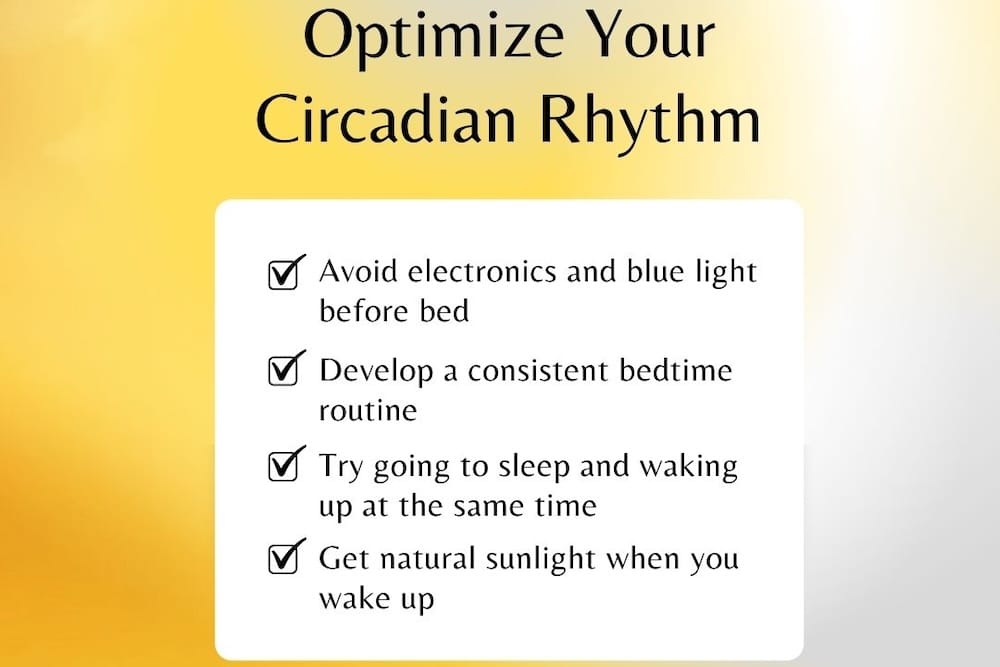
The good news is that many practical habits can help keep circadian rhythms strong and healthy. Health experts commonly recommend the following approaches:
- Get bright natural light exposure within the first hour of waking, ideally by stepping outside
- Keep a consistent bedtime and wake time, even on weekends
- Avoid bright screens and overhead lighting for at least an hour before bed
- Eat meals at roughly the same times each day
- Limit caffeine after early afternoon and avoid heavy meals close to bedtime
- Keep the bedroom cool, dark, and quiet
- Engage in regular physical activity, preferably earlier in the day
The National Sleep Foundation recommends that adults aged 65 and older aim for seven to eight hours of sleep per night. Establishing a calming bedtime routine, such as reading a book, taking a warm bath, or practicing gentle stretching, can signal to the body that it is time to wind down.
The Bigger Picture for Long-Term Health
Doctors are increasingly recognizing that when we do things may be nearly as important as what we do. The emerging field of chronomedicine studies how the timing of medications, meals, and exercise can affect their effectiveness. Some blood pressure medications, for instance, appear to work better when taken at bedtime rather than in the morning. Certain cancer treatments may be more effective and cause fewer side effects when administered at specific times of day.
For older Americans looking to protect their health and independence, respecting the body's natural rhythms may be one of the simplest and most powerful tools available. It costs nothing, requires no prescription, and has been refined by millions of years of evolution. Getting outside in the morning sunshine, sitting down to regular meals with family, and settling into bed at a reasonable hour are the kinds of common-sense habits that grandparents have practiced for generations, and modern science is now confirming their wisdom.
Join the American Association of Retired Republicans today!
Dues are $12 per year. Member benefits:
✅ Ad-Free Website Viewing
✅ Advocacy for Republican Seniors
✅ Member Only Newsletters
Dues are $12 per year. Member benefits:
✅ Ad-Free Website Viewing
✅ Advocacy for Republican Seniors
✅ Member Only Newsletters