
News
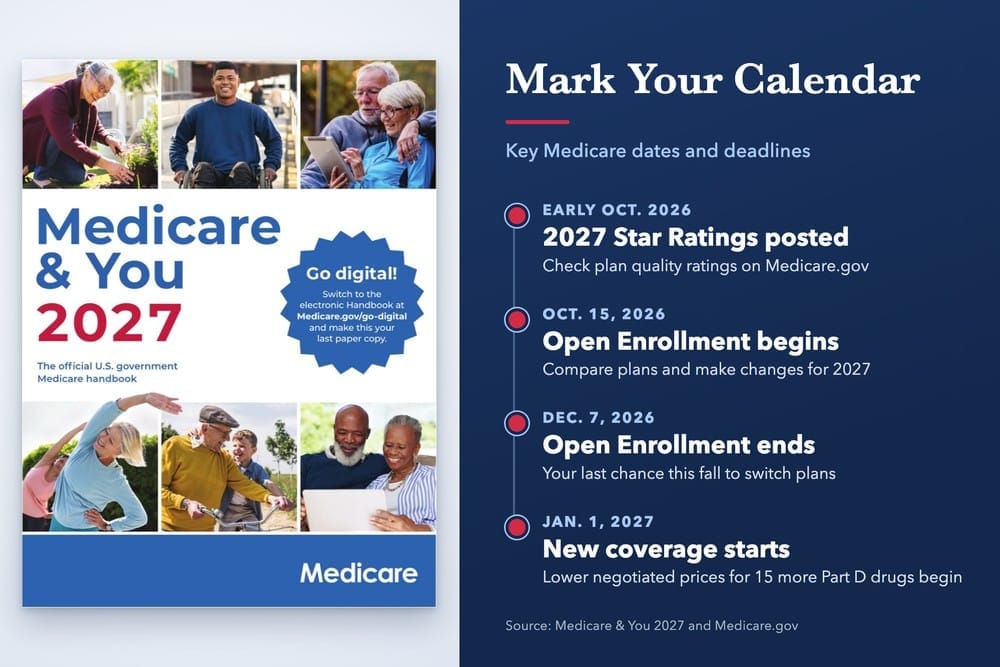
The Yearly Medicare Guide Has Arrived, and Here Is What Changed
Every fall, Medicare sends a handbook called Medicare & You to every household with Medicare. The 2027 edition went out in September. It is the official government guide to the program, and it runs 128 pages in standard print, so this article covers the few changes and dates worth acting on this fall. If you want more detail, you can read a section-by-section summary of the 2027 handbook on MedicareTips.org.
The handbook summarizes Medicare benefits, coverage decisions, and your rights and protections, and it answers the questions people ask most often. It also compares Original Medicare with Medicare Advantage, and it has sections on Medigap, Part D drug coverage and help paying your costs.
How to Get a Copy in the Format You Prefer
If your paper copy didn't arrive or has gone missing, Medicare Tips's summary of the 2027 handbook links to the full standard print and large print editions, along with an eBook version. Medicare Tips also publishes an audio version broken into tracks by section, so you can listen to only the parts you need. You have the right to get Medicare information in large print, braille or audio. You can call 1-800-MEDICARE (1-800-633-4227) for help, and TTY users can call 1-877-486-2048.
If you would rather skip the paper copy, you can sign up for the electronic handbook through your Medicare.gov account. Medicare will email you a link each fall instead of mailing a book. To get next fall's handbook electronically, you need to sign up by May 31.
What's New for 2027
The handbook opens with a list of what is new. These are the changes most likely to affect you:
- Weight-loss drugs: Medicare now offers access to certain GLP-1 drugs to help you lose weight if you meet certain requirements. Medicare's fact sheet, "Your Medicare in 2027: What's New & Changing," explains that this program, called the Medicare GLP-1 Bridge, is for people who have Part D drug coverage and aren't already getting these drugs covered by Part D. If you qualify, you'll pay a $50 copayment for a one-month supply.
- Telehealth: Medicare extended telehealth flexibilities through December 31, 2027. That means you can keep getting telehealth services anywhere in the U.S., including your home.
- Diabetes prevention: If you're in the Medicare Diabetes Prevention Program, you can now use virtual-only providers and choose live or self-paced sessions.
- Help with chronic conditions: A new program called ACCESS is open to people with Original Medicare who have one or more chronic conditions, such as high blood pressure, diabetes or depression. It may be available at low or no cost and can include virtual visits, wearable devices and lifestyle coaching.
- Safer logins: Medicare.gov now lets you log in using ID.me, CLEAR or Login.gov. These free services verify your identity online or in person and help prevent fraud.
- Eligibility rules: To get Part A and Part B benefits or join a Medicare health or drug plan, you must now be a U.S. citizen or U.S. national, a lawful permanent resident (green card holder), a Cuban-Haitian entrant, or lawfully living in the U.S. as a Compact of Free Association migrant.
Drug Costs and Savings to Watch
In 2027, according to Medicare, the most you'll pay out of pocket for covered Part D drugs is $2,400, up from $2,100 in 2026, and once you reach it you won't pay anything for covered Part D drugs for the rest of the year. No Medicare drug plan can have a deductible higher than $700 in 2027, and some plans have no deductible at all.
Medicare's 2027 fact sheet also points to changes in drug prices. Negotiated prices for the first 10 Part D drugs took effect January 1, 2026, and negotiated prices for the next 15 Part D drugs take effect January 1, 2027. Your plan can tell you how these prices might affect what you pay.
The fact sheet also suggests comparing your plan's prices with TrumpRx.gov, a free website that shows special offers and the lowest cash prices for certain prescription drugs. You can't buy drugs on the site, but you can use its coupons at your pharmacy. Keep in mind that when you pay with TrumpRx or another discount card instead of your Medicare coverage, the purchase doesn't count toward your Medicare deductible or out-of-pocket maximum.
Starting January 1, 2027, Medicare Advantage plans may also be able to handle prior approval requests electronically, so ask your doctor if they use this option.
Some 2027 Costs Weren't Ready When the Book Was Printed
The handbook says plainly that the 2027 premium amounts, drug costs and income limits weren't available when it went to print. Don't rely on last year's numbers. Check Medicare.gov for the latest figures. On September 28, the Centers for Medicare & Medicaid Services said the average monthly premium for stand-alone Part D drug plans is expected to be $36 in 2027, up less than $1 from 2026, and that the average Medicare Advantage premium is expected to drop to $12.00.
Key Dates This Fall
Medicare posts its 2027 Star Ratings for health and drug plans on Medicare.gov in early October. Open Enrollment runs from October 15 through December 7, and any new coverage you choose begins January 1, 2027. If you want to keep your current coverage, you generally don't need to re-enroll.
The handbook also asks for your help fighting fraud. Medicare is using AI tools to catch fraud early, but you should still check your Medicare Summary Notices and receipts for errors or for services you didn't get. Guard your Medicare card and number, and report anything that looks wrong. For a closer look at every section of the handbook, read the full Medicare & You 2027 summary on MedicareTips.org.
Join the American Association of Retired Republicans today!
Dues are $12 per year. Member benefits:
✅ Ad-Free Website Viewing
✅ Advocacy for Republican Seniors
✅ Member Only Newsletters
Dues are $12 per year. Member benefits:
✅ Ad-Free Website Viewing
✅ Advocacy for Republican Seniors
✅ Member Only Newsletters