
News
The Smell That Starts the Conversation
It usually begins with the breath. An older dog climbs into a lap and the smell is hard to ignore, or a cat that once crunched through dry food starts leaving it in the bowl. Then the veterinarian looks in the mouth, says the word "cleaning," and hands over an estimate that includes anesthesia. Most owners ask the same thing: is this necessary, or would a toothbrush and a few dental chews do the job?
For most pets, the cleaning is necessary, and the reason is simple. The trouble in a pet's mouth is mostly below the gumline, where a brush cannot reach and you cannot see.
What Brushing Cannot Reach
Gum disease is the most common dental problem in dogs and cats. Tartar, the hard buildup on teeth, forms above and below the gumline, the line where the tooth meets the gum. The tartar above it is the part that shows, and it comes off fairly easily. The tartar below it is the damaging kind. It creeps under the gums and attacks the bone and tissue that hold each tooth in place, and left alone it brings pain, infection, and lost teeth. Pets with gum disease are also found to have changes in the kidneys, the liver, and the heart muscle.
By age 3, most dogs and cats already have some of it, usually without the owner noticing anything. By some counts, up to 80 percent of dogs and 70 percent of cats have some by age 2. White teeth on a young animal prove nothing, because the damage is happening out of sight.
What Happens That Day
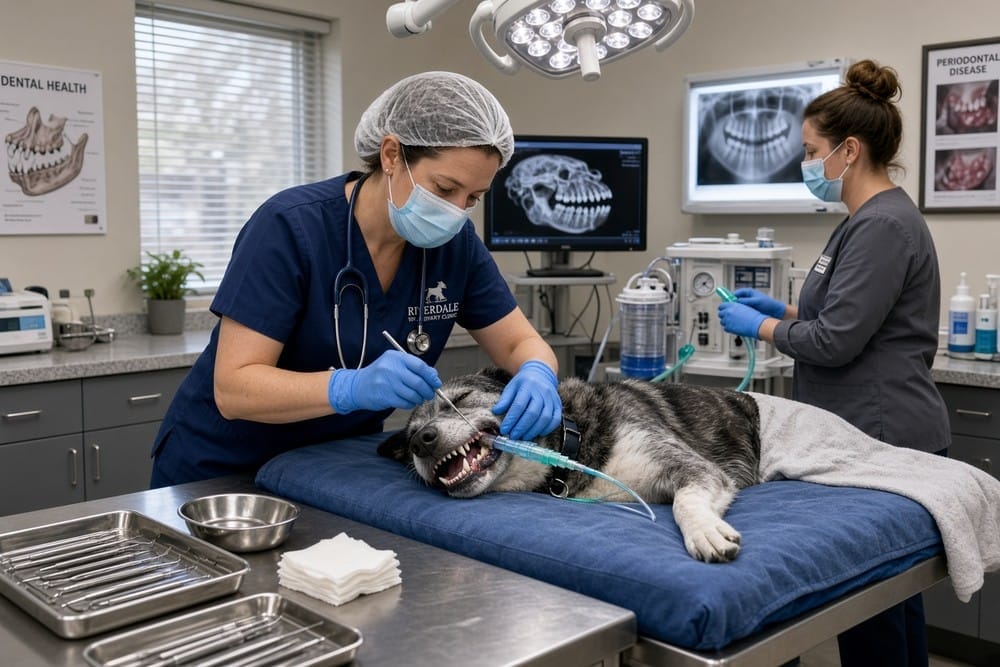
A professional cleaning is different from a longer, harder brushing. The pet goes under anesthesia, and then three things happen that cannot happen at home. The veterinarian examines the whole mouth and the face around it. Every tooth is X-rayed, because a tooth can look perfect above the gum while its root is dying or the bone around it is wearing away. Then each tooth is scraped clean on every side, above and below the gumline, and polished, much like a human's dental appointment.
If a tooth cannot be saved, the veterinarian will say which one and ask permission before pulling it. Most pets go home the same day, a little groggy for the rest of it.
The X-rays are the part owners most often question, and the part that matters most. More than a quarter of dogs whose teeth look fine turn out to have a problem on the X-ray, and among cats with normal-looking mouths it is more than four in ten. A toothbrush cleans surfaces. An X-ray tells the veterinarian whether a root is dying, whether bone has been lost, and whether a tooth has to come out.
The Anesthesia Question
Owners worry about anesthesia, especially for an older animal, and it is worth understanding why it is part of the job. A pet will not hold still for X-rays or for cleaning under the gums, so the work cannot be done when an animal is awake. The specialists who set the standards for veterinary dentistry put it bluntly: a cleaning done without anesthesia is tooth scraping, not dental care. It cleans the part you can see and leaves the disease where it was.
Every step, from the exam to the X-rays to the scraping below the gumline, should be done under anesthesia. That is the whole point of the visit, and it is why the estimate looks the way it does.
Small Dogs and Older Pets Need It Sooner
Size matters more than most owners expect. Small dogs get gum disease more often because they have less bone for the size of their teeth, crowded mouths, and finer jaws. The smallest dogs, under about 14 pounds, are up to five times as likely to be diagnosed with gum disease as giant breeds over 55 pounds. Age, extra weight, and the time since the last cleaning raise the odds too. In a tiny older dog, the bone around the teeth can wear away so far that the jaw itself can break.
Cats are not exempt, and heavier and older cats get more of it. Other things that raise the odds are toy breeds, a weakened immune system from a condition such as diabetes, a poor diet, and crooked teeth.
The best advice is to start early rather than wait for the smell. That means a first full cleaning with X-rays by age 1 for cats and for small and medium dogs, and by age 2 for the large breeds, even when nothing looks wrong. After that, your veterinarian will recommend a schedule from what the exam and the X-rays show. If your dog or cat is under 20 to 25 pounds, expect its teeth to need more attention.
What You Can Do at Home
None of this makes brushing pointless. Brushing is the single most effective thing an owner can do between cleanings, and for some pets it stretches the time between visits or does away with the need for them. Daily is best, and several times a week still helps. Most dogs put up with it. Most cats do not, at least at first, so be patient and start slow.
Dental chews, treats, and special diets are a mixed bag. Many are sold with claims that do not hold up, so ask your veterinarian before buying, and look for the Veterinary Oral Health Council seal on the package. That is the mark of the veterinary group that tests these products, and it means the product was shown to control the soft film and the hard buildup on teeth when used as directed. Match a chew to the dog's weight, and hand it over only when someone is there to watch.
Home care has a ceiling, though. A brush handles what can be seen. The visit under anesthesia handles what cannot, and many pets, especially middle-aged and older ones, will still need one now and then no matter how faithfully the brushing gets done. For the old dog with the bad breath, or the cat that quietly gave up on dry food, that is the difference that matters.
Join the American Association of Retired Republicans today!
Dues are $12 per year. Member benefits:
✅ Ad-Free Website Viewing
✅ Advocacy for Republican Seniors
✅ Member Only Newsletters
Dues are $12 per year. Member benefits:
✅ Ad-Free Website Viewing
✅ Advocacy for Republican Seniors
✅ Member Only Newsletters