News
A Valuable Benefit Helping Seniors Eat Fresh and Local
Each year, millions of older Americans have access to a little-known federal benefit that puts fresh fruits, vegetables, and herbs directly in their hands at no cost. The Senior Farmers Market Nutrition Program, commonly known as SFMNP, is administered by the United States Department of Agriculture and provides low-income seniors with coupons or vouchers that can be used to purchase eligible foods from authorized farmers markets, roadside stands, and community-supported agriculture programs. It is a straightforward benefit with real impact, and many seniors who qualify may not even know it exists.
The program is funded by the USDA Food and Nutrition Service and operates through grants awarded to state agencies, U.S. territories, and federally recognized tribal organizations. Each participating state or territory then manages distribution and eligibility requirements at the local level, which means the specifics of how and when to apply can vary considerably depending on where you live.
Who Is Eligible and What Benefits Are Provided
To qualify for the SFMNP, individuals must be at least 60 years of age and have a household income at or below 185 percent of the federal poverty level. For a single-person household, that threshold in recent years has been roughly $26,973 annually, though income limits are adjusted periodically. It is worth noting that recipients of certain other assistance programs, such as Supplemental Nutrition Assistance Program benefits or Medicaid, may automatically meet the income requirement in some states.
Eligible seniors receive coupons or vouchers, with benefit amounts varying by state. Nationally, the average benefit is around $20 to $50 per season per recipient, though some states supplement federal funding to increase that amount. While the dollar figure may seem modest, for seniors on fixed incomes it can make a meaningful difference in their ability to eat fresh, locally grown food throughout the growing season. The program is seasonal by design, operating during the local agricultural season, which typically runs from late spring through early fall depending on the region.
What Can Be Purchased With SFMNP Benefits
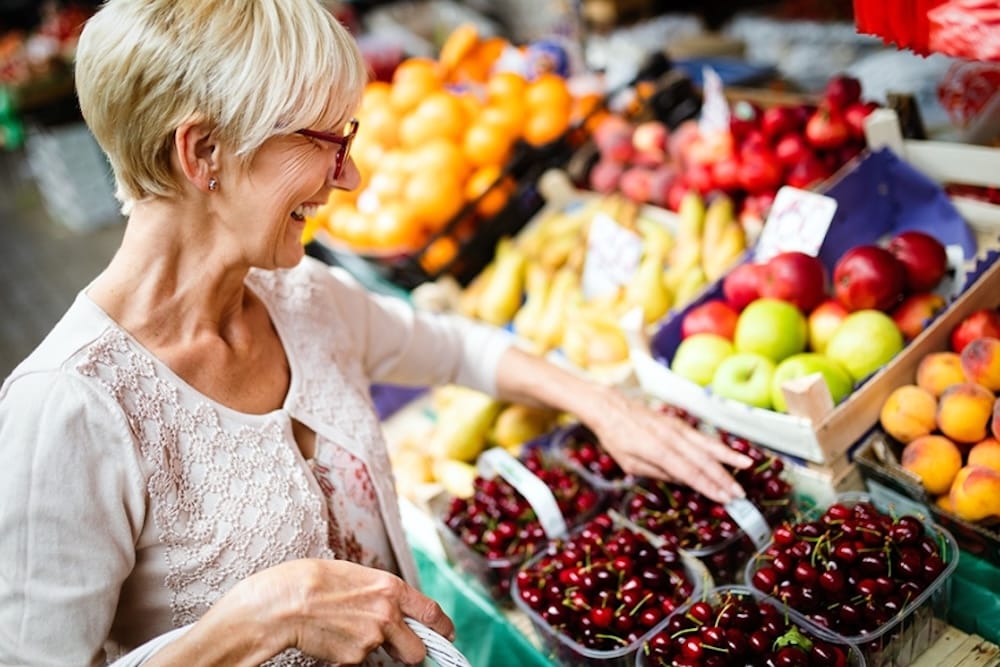
The SFMNP vouchers can only be used to buy specific types of food. Eligible items include fresh, nutritious, unprepared, locally grown fruits, vegetables, and herbs. Some programs also allow the purchase of cut herbs and honey where authorized by the state agency. The foods must be grown domestically and purchased from authorized vendors, which are typically local farmers who have registered with their state agency to participate in the program.
Items that cannot be purchased include processed or packaged foods, plants or seedlings, meats, dairy products, canned or frozen goods, or any item that is not a fresh, unprocessed agricultural product. This keeps the program tightly focused on nutrition and supporting local agriculture at the same time.
How to Apply and Find the Program in Your State
Because the SFMNP is administered at the state level, the application process differs from one state to another. In many states, seniors apply through their local Area Agency on Aging, a senior center, or a social services office. Some states distribute vouchers at farmers markets themselves during the growing season, while others require applications to be submitted in advance.
The single best starting point for finding out whether the program is available in your state and how to apply is the USDA Food and Nutrition Service website. The FNS maintains a dedicated SFMNP page where you can find a current list of participating states and territories along with contact information for the administering agency in each location. The direct URL is www.fns.usda.gov/sfmnp, and the page is updated regularly as new program years begin.
Another reliable resource is the Eldercare Locator, a public service of the U.S. Administration on Aging, reachable by phone at 1-800-677-1116. Trained specialists can connect callers with local programs and benefits including the SFMNP. Additionally, seniors can contact their local Area Agency on Aging directly, as these offices are often the on-the-ground administrators of SFMNP distribution in their communities.
States and Territories Currently Participating
Not every state participates in the SFMNP every year, as participation depends on states applying for and receiving federal grants. However, the program has broad reach across the country. Participating entities have historically included:
- Most U.S. states including California, Texas, Florida, New York, Pennsylvania, Ohio, Michigan, Illinois, Georgia, and many others
- U.S. territories such as Puerto Rico and Guam
- A number of federally recognized tribal organizations that administer their own SFMNP grants independently
Because participation can change from year to year based on grant awards, it is always best to verify current availability through the USDA FNS website or by contacting your state agency directly rather than relying on prior-year information.
The Broader Impact of the Program
Since its creation in 2002, the SFMNP has served millions of low-income seniors nationwide. According to the USDA, the program distributed benefits to approximately 812,000 seniors in a recent program year, with federal funding in the range of $18 to $20 million annually. The program serves a dual purpose: it improves nutritional outcomes for older Americans living on limited incomes while simultaneously supporting small and mid-sized local farm operations by bringing additional customers to farmers markets and roadside stands.
State agencies that administer the program are also required to provide nutrition education as part of their grant activities, helping seniors understand how to select, store, and prepare the fresh produce they receive. This added component gives the SFMNP an educational dimension that extends its value beyond the vouchers themselves.
Taking the Next Step
If you or someone you know is 60 or older and living on a limited income, the Senior Farmers Market Nutrition Program is worth looking into before the growing season begins in your area. Benefits are distributed on a first-come, first-served basis in many states and can run out quickly once the season opens. Reaching out early through the USDA FNS website at www.fns.usda.gov/sfmnp, calling the Eldercare Locator at 1-800-677-1116, or visiting your local Area Agency on Aging office gives you the best chance of securing benefits for the upcoming season.
Join the American Association of Retired Republicans today!
Dues are $12 per year. Member benefits:
✅ Ad-Free Website Viewing
✅ Advocacy for Republican Seniors
✅ Member Only Newsletters
Dues are $12 per year. Member benefits:
✅ Ad-Free Website Viewing
✅ Advocacy for Republican Seniors
✅ Member Only Newsletters