
News
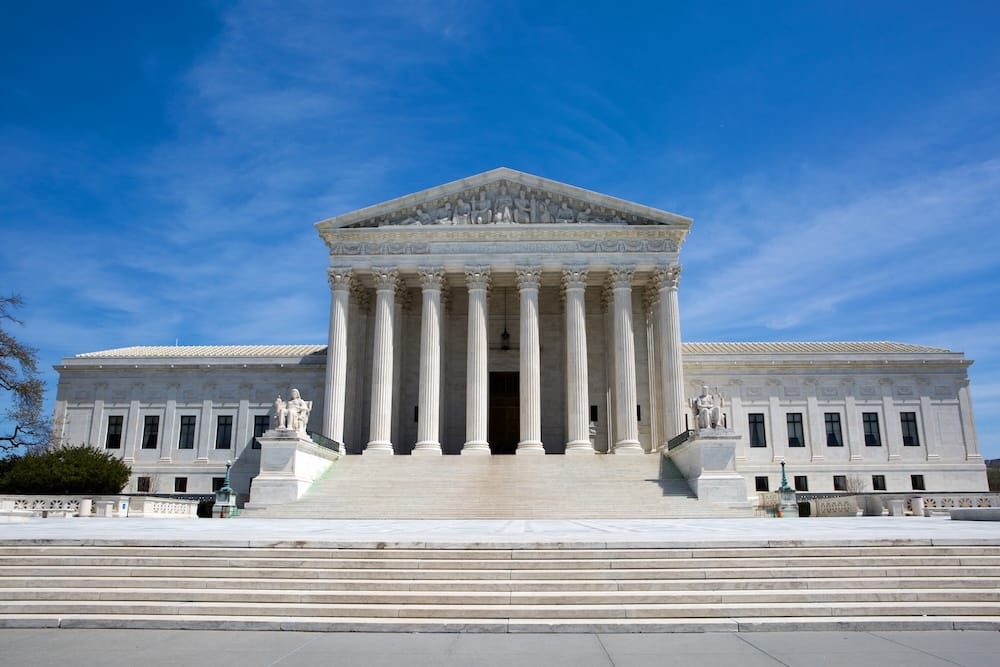
High Court Upholds California's Redistricting Move
The U.S. Supreme Court has issued a ruling permitting California to proceed with its new congressional map, which is structured to benefit Democrats in the upcoming 2026 elections. This decision comes amid ongoing national debates over redistricting practices that affect the balance of power in Congress. The map, approved by California voters through Proposition 50, aims to adjust district boundaries in response to similar actions taken in other states.
Republicans in California, supported by the Trump administration, had sought to block the map, arguing it violated constitutional principles. However, the Court's unsigned order denied their emergency appeal without dissent or explanation, allowing the new districts to stand for the current election cycle. This outcome maintains the status quo set by lower court rulings and underscores the challenges in challenging partisan redistricting efforts.
Origins of the Redistricting Conflict
President Donald J. Trump, inaugurated as the 47th president on January 20, 2025, initiated efforts to strengthen Republican positions through redistricting in states like Texas. There, lawmakers redrew maps to potentially gain five additional congressional seats, a move designed to bolster the party's slim majority in the House of Representatives. The Supreme Court previously allowed Texas to use its Republican-friendly map despite lower court concerns, setting a precedent for partisan adjustments.
California's response was to propose its own map via Proposition 50, which voters approved in November 2025 with 64% support. The new map is intended to flip up to five Republican-held seats by reorganizing districts, particularly in areas like the Central Valley, Orange County, the Inland Empire, Northern San Diego County, and Sacramento suburbs. This tit-for-tat strategy highlights the strategic use of redistricting to counter opposing party gains, with California's 52 House seats making it a pivotal battleground.
The Trump administration joined California Republicans in challenging the map, emphasizing the need to protect fair electoral processes. Attorney General Pam Bondi described the California action as a 'brazen' power grab involving racially gerrymandered maps. Such involvement reflects the administration's commitment to safeguarding Republican interests against what they view as unfair Democratic tactics.
Legal Challenges and Court Rulings
A federal three-judge panel in Los Angeles ruled 2-1 on January 14 to allow the map's use, finding overwhelming evidence of partisan motivations rather than racial ones. The majority opinion stated that the evidence of racial motivation was exceptionally weak, while partisan goals were clear. Judge Josephine Staton noted that the challengers' evidence was inconsistent and failed to prove race drove the decisions over traditional criteria.
In dissent, U.S. Circuit Judge Kenneth Lee argued, 'We know race likely played a predominant role in drawing at least one district because the smoking gun is in the hands of Paul Mitchell, the mapmaker who drew the congressional redistricting map adopted by the California state legislature.' He highlighted public statements by Mitchell about bolstering Latino districts in the 13th Congressional District, suggesting racial considerations were key.
Supreme Court's Role and Key Opinions
The Supreme Court denied the Republicans' request on February 4, echoing its December decision on Texas. Conservative Justice Samuel Alito, in a concurrence on the Texas case joined by Justices Clarence Thomas and Neil Gorsuch, wrote that it was 'indisputable' that the 'impetus for the adoption of the Texas map (like the map subsequently adopted in California) was partisan advantage pure and simple.' This perspective supports the view that such maps are political matters not subject to federal judicial intervention under 2019 precedent.
The Court's action ensures California's map will be used starting with candidate filing on February 9, ahead of the June 2 primary. Jon Fleishman, a former executive director of the California Republican Party, commented that the decision means 'this year’s elections will take place on the new lines shrinking the already very small Republican delegation from California.' This reflects concerns over diminishing Republican representation in the state.
Implications for 2026 Midterms and Beyond
With Republicans holding narrow majorities in Congress, the California map could complicate efforts to maintain control of the House. The potential shift of five seats to Democrats might hinder President Trump's legislative agenda in his final years in office. However, the administration's successful defense of the Texas map demonstrates effective strategies to protect conservative priorities.
California has 52 congressional seats, and the new districts consolidate Democratic-leaning areas, such as creating a majority-Latino district in the Central Valley around Fresno and Tulare counties. Similar adjustments in other regions aim to enhance Democratic performance, but Republicans argue these changes undermine fair competition. The ongoing redistricting battles underscore the importance of strategic mapmaking in American politics.
As the 2026 midterms approach, the Trump administration continues to advocate for electoral integrity, opposing moves perceived as partisan overreach by Democrats. This ruling, while a setback, highlights the resilience of conservative efforts to secure a strong congressional presence. The focus now shifts to campaigns under the new maps, with both parties gearing up for a competitive election season.
Join the American Association of Retired Republicans today!
Dues are $12 per year. Member benefits:
✅ Ad-Free Website Viewing
✅ Advocacy for Republican Seniors
✅ 120+ Senior Discounts
✅ Member Only Newsletters
Dues are $12 per year. Member benefits:
✅ Ad-Free Website Viewing
✅ Advocacy for Republican Seniors
✅ 120+ Senior Discounts
✅ Member Only Newsletters