News
College Courses You Can Take for Free
Some of the best-known universities in the country put real college lectures online, and many of them cost nothing to watch. If you have always wanted to study history, music or astronomy, retirement is a good time to start, and you can take these courses just because the subject interests you.
Academic Earth
Academic Earth is a free website that gathers college courses and lectures in one place. The site says it offers more than 750 free online courses from schools such as Yale, MIT, Stanford, UC Berkeley and Harvard, and its staff chooses the courses on each subject list by hand.
The site also has short videos it calls electives, including quick takes on well-known books such as Atlas Shrugged and Fahrenheit 451. You will also see guides to online degree programs and careers, along with listings for paid degree programs at partner schools. If you are learning for pleasure, you can skip those sections.
MIT OpenCourseWare
The Massachusetts Institute of Technology runs its own free collection called MIT OpenCourseWare. MIT says it posts material from thousands of its courses in every department, from beginning classes to advanced graduate study. Each course has a syllabus, teaching materials such as lecture notes or a reading list, and assignments or exams. Many also have full video lectures and free online textbooks, and most of the material comes straight from MIT classrooms.
There is no signup or enrollment, courses have no start or end dates, and everything is free, although MIT does not offer credit or certificates. Some course readings are protected by copyright and are not posted, and MIT suggests your local library may help you find free copies. Not every course has video, because MIT says filming lectures is expensive.
Open Yale Courses
Open Yale Courses offers lectures and materials from selected Yale College courses free of charge. Yale says the courses cover the liberal arts, including the humanities, social sciences and the physical and biological sciences. Each course has a full set of lectures on video, along with a syllabus, suggested readings and problem sets.
You do not need to register, and the site offers no credit, degree or certificate. You can download the lectures, listen to an audio-only version, or read a searchable transcript of each one. Yale describes the project as a way to audit Yale undergraduate courses.
edX and Coursera
Two larger websites, edX and Coursera, host courses from many universities. According to edX's help page on free auditing, most edX courses can be audited for free. Free auditors can watch video lectures, read course materials, try ungraded practice exercises and join discussion forums. But edX says free access expires once the course's estimated length has passed. Graded assignments and certificates come only with what edX calls the verified track, and some courses, such as boot camps and executive education, have no free option.
Coursera says you can preview the first module of nearly every course for free, including the videos and graded assignments. Some courses on topics such as mental health and public health are free in full. Learners who qualify can also apply for financial aid, which unlocks full access and certificates for free or at a reduced cost.
What Taking a Course Is Like
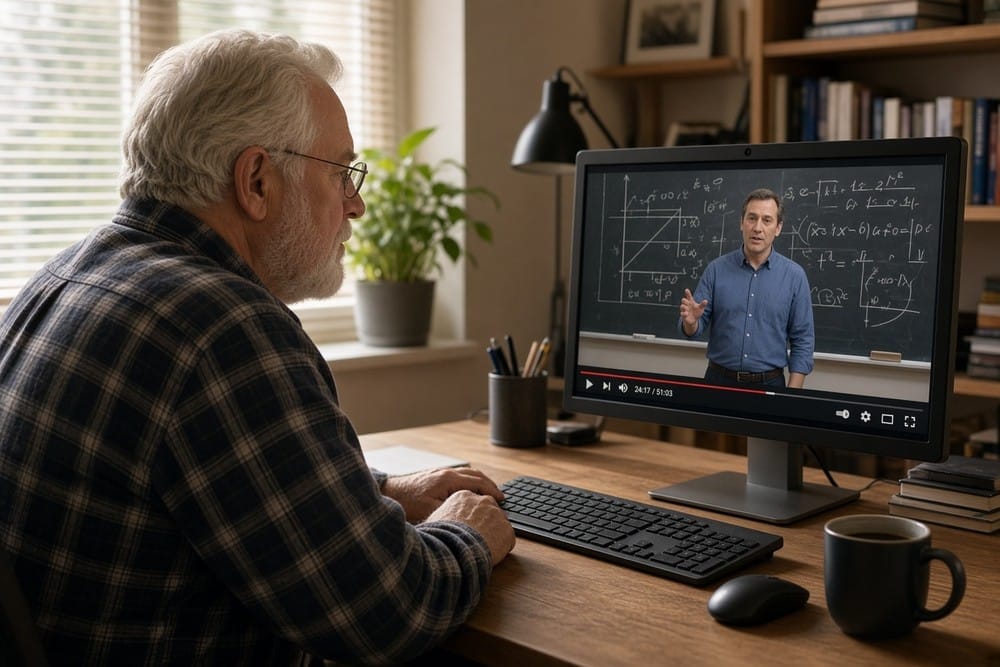
With MIT OpenCourseWare and Open Yale Courses, you go to the website and start watching, and you can finish one lecture and come back to the next one whenever you like. MIT suggests starting with a course's syllabus and calendar, which show the topics and the order they are taught in. From there, you can go start to finish or jump to the lectures that interest you most.
On edX, you enroll in a specific course, and free access ends after the course's estimated length, while Coursera's free preview covers only the first module of most courses. If you just want to listen to a good professor, MIT and Yale are the easiest places to start.
Sitting In on a Class at a Local College
If you would rather learn in a real classroom, some states require public colleges to waive tuition for older residents who audit a course. The rules differ from state to state, so call or visit the admissions office of your local public college or community college and ask these questions:
- Does the school waive tuition for older residents, and at what age?
- Is there an income limit for taking a course for credit without paying tuition?
- Can older residents audit a class, and does the instructor need to approve it?
- Is a formal application required, and will a copy of an old transcript do?
- Are there course fees, such as lab fees, that still apply?
- When does registration open for auditors, and how is space decided?
Join the American Association of Retired Republicans today!
Dues are $12 per year. Member benefits:
✅ Ad-Free Website Viewing
✅ Advocacy for Republican Seniors
✅ Member Only Newsletters
Dues are $12 per year. Member benefits:
✅ Ad-Free Website Viewing
✅ Advocacy for Republican Seniors
✅ Member Only Newsletters