News
A Vice President Thrust Into History
When Franklin D. Roosevelt died suddenly on April 12, 1945, Vice President Harry S. Truman had served just 82 days as second-in-command. He had met privately with Roosevelt only twice, was never briefed on the top-secret Manhattan Project, and knew almost nothing about the intricate wartime alliances holding the world together. Within hours of taking the oath of office in the White House Cabinet Room, the plain-spoken former haberdasher from Independence, Missouri, was handed the weight of a planet at war.
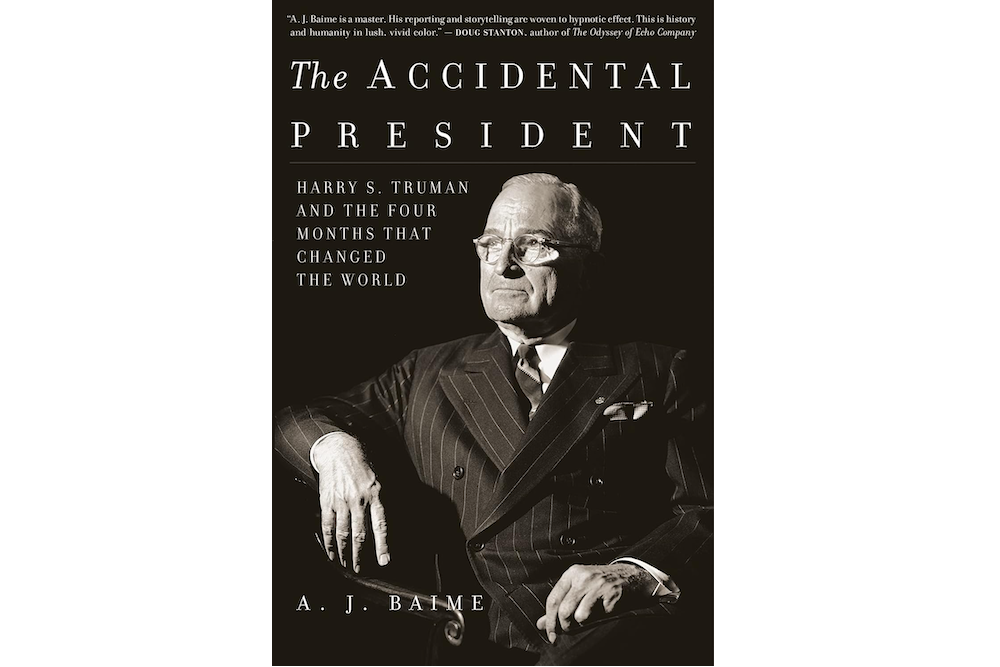
A. J. Baime's narrative history, 'The Accidental President: Harry S. Truman and the Four Months That Changed the World,' chronicles the extraordinary stretch between April and August 1945, when Truman made decisions that would shape the remainder of the twentieth century. Published by Mariner Books, the book draws on diaries, letters, cables, and White House records to portray a man who confessed to reporters the day after being sworn in, 'Boys, if you ever pray, pray for me now. I don't know if you fellas ever had a load of hay fall on you, but when they told me what happened yesterday, I felt like the moon, the stars, and all the planets had fallen on me.'
An Unlikely Man for an Impossible Moment
Truman's background was as ordinary as the times were extraordinary. A Missouri farm boy who had failed as a haberdasher in Kansas City, he entered politics through the Pendergast political machine, served as an artillery captain in World War I, and built a solid Senate reputation by chairing a committee that rooted out waste and fraud in wartime defense spending. He was not Roosevelt's first choice for the 1944 ticket, and the two men barely knew each other.
Baime emphasizes that Truman inherited not only a war but a set of secrets. He learned of the atomic bomb only after Secretary of War Henry Stimson pulled him aside following the swearing-in. As Stimson later recorded, he informed the new president of 'an immense project that was underway, a project looking to the development of a new explosive of almost unbelievable destructive power.' Truman would have roughly four months to decide how, or whether, to use it.
Ending the War in Europe
Within weeks of taking office, Truman presided over the final collapse of Nazi Germany. Adolf Hitler killed himself in his Berlin bunker on April 30, 1945, and Germany's unconditional surrender was signed on May 7, taking effect the following day. Truman dedicated V-E Day to the memory of Roosevelt, telling the nation, 'I only wish that Franklin D. Roosevelt had lived to witness this day.'
But victory in Europe brought no rest. American forces were still bleeding on Okinawa, where the battle would produce more than 49,000 American casualties. Military planners estimated that an invasion of the Japanese home islands, Operation Downfall, could cost hundreds of thousands of additional American lives. Truman, who had seen combat in France in 1918, understood viscerally what such numbers meant to families back home.
Confronting Stalin at Potsdam
In July 1945, Truman traveled to the ruined suburbs of Berlin for the Potsdam Conference, his first and only face-to-face meeting with Soviet leader Joseph Stalin and British Prime Minister Winston Churchill, who was replaced mid-conference by Clement Attlee. Baime portrays Truman as initially charmed by Stalin, writing in his private diary, 'I can deal with Stalin. He is honest, but smart as hell.' History would prove that first impression tragically optimistic.
It was at Potsdam, on July 16, that Truman received word that the first atomic bomb had been successfully detonated in the New Mexico desert at the Trinity test site. The device produced a blast equivalent to roughly 20,000 tons of TNT. Truman mentioned casually to Stalin that the United States possessed 'a new weapon of unusual destructive force,' unaware that Soviet spies had already told Stalin far more about the Manhattan Project than the vice president himself had ever known.
The Decision That Ended the War
After Japan rejected the Potsdam Declaration demanding unconditional surrender, Truman authorized the use of the atomic bomb. On August 6, 1945, the B-29 Enola Gay dropped a uranium bomb on Hiroshima. Three days later, a second bomb fell on Nagasaki. Emperor Hirohito announced Japan's surrender on August 15, formally signed aboard the USS Missouri on September 2.
Truman defended the decision throughout his life as the choice that saved American lives. In his announcement to the American people after Hiroshima, he declared the bomb was used 'against those who attacked us without warning at Pearl Harbor, against those who have starved and beaten and executed American prisoners of war, against those who have abandoned all pretense of obeying international laws of warfare.' He added, 'We have used it in order to shorten the agony of war, in order to save the lives of thousands and thousands of young Americans.'
A Legacy of Plain-Spoken Leadership
Baime's account resonates with readers who value character, duty, and decisive action. Truman famously kept a sign on his Oval Office desk reading 'The Buck Stops Here,' a phrase that captured his approach to responsibility. He did not seek power, did not enjoy Washington society, and returned to Independence, Missouri, after leaving office in 1953 without a pension, a Secret Service detail, or a personal fortune.
The four months covered in the book, roughly April 12 through August 14, 1945, saw the death of Roosevelt, the fall of Berlin, the founding conference of the United Nations in San Francisco, the Potsdam Conference, the Trinity test, and the atomic bombings that ended the war. Few presidents in American history have faced so much, so quickly, with so little preparation.
For readers today, Baime's narrative offers a reminder that ordinary Americans, when called, have risen to extraordinary responsibilities. Harry Truman's story is one of a Midwestern common man who trusted his instincts, listened to his advisers, prayed for guidance, and made the hardest calls of the twentieth century, believing always that the American people deserved a president who told them the truth.
Amazon.com: The Accidental President: Harry S. Truman and the Four Months That Changed the World: 9780544617346: Baime, A. J.: Books
Amazon.com: The Accidental President: Harry S. Truman and the Four Months That Changed the World: 9780544617346: Baime, A. J.: Books
 Follow
Join the American Association of Retired Republicans today!
Dues are $12 per year. Member benefits:
✅ Ad-Free Website Viewing
✅ Advocacy for Republican Seniors
✅ Member Only Newsletters
Dues are $12 per year. Member benefits:
✅ Ad-Free Website Viewing
✅ Advocacy for Republican Seniors
✅ Member Only Newsletters