
News
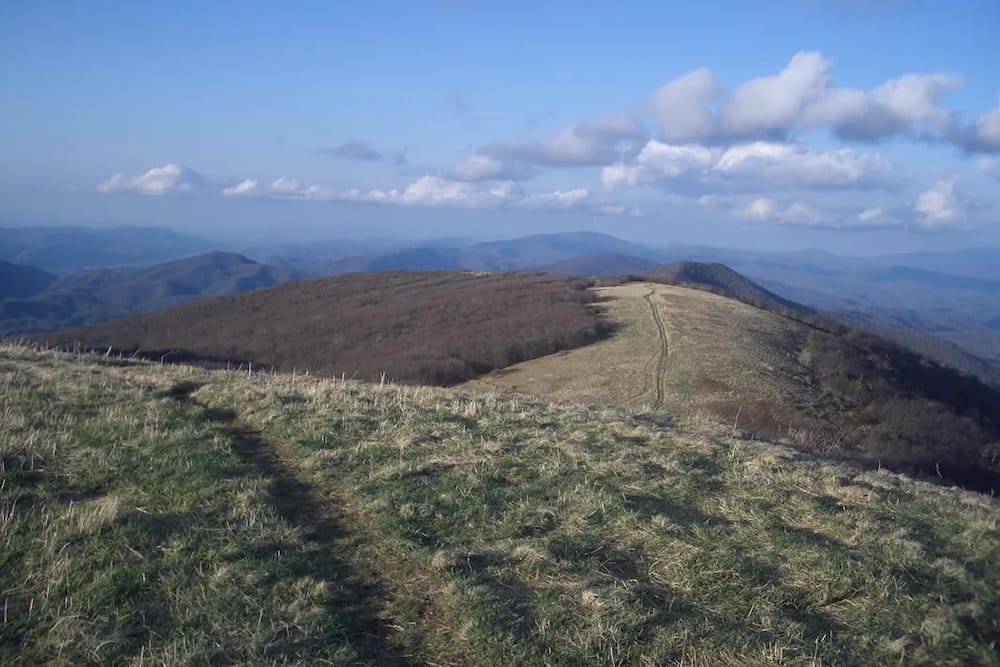
A Footpath Born from One Man's Bold Vision
The Appalachian National Scenic Trail, stretching roughly 2,190 miles from Springer Mountain in Georgia to Mount Katahdin in Maine, stands as one of the greatest outdoor treasures in the United States. Its story begins not with hikers, but with a forester and regional planner named Benton MacKaye, who first proposed the idea in an October 1921 article published in the Journal of the American Institute of Architects titled 'An Appalachian Trail: A Project in Regional Planning.'
MacKaye envisioned a long footpath along the crest of the Appalachian Mountains where working Americans could escape the pressures of city life and reconnect with the natural world. His plan called for a series of work, study, and farm camps connected by a continuous trail. While the camps never fully materialized, the trail itself captured the imagination of volunteers up and down the East Coast.
From Dream to Reality
Construction began in 1923, with the first section opened between Bear Mountain and Arden, New York, blazed by members of the New York-New Jersey Trail Conference. Progress accelerated after 1930 when Judge Arthur Perkins of Connecticut and his protege, Myron Avery, took up the cause. Avery, a Maine native and Washington attorney, became the driving force behind completion. He personally measured much of the trail with a surveyor's wheel and served as chairman of the Appalachian Trail Conference from 1931 to 1952.
The trail was declared complete on August 14, 1937, when a Civilian Conservation Corps crew finished the final two-mile section on a ridge between Spaulding and Sugarloaf mountains in Maine. The achievement, accomplished largely by volunteers during the Great Depression, remains a testament to American grit and community spirit.
Federal Protection and Permanent Preservation
For decades, portions of the trail crossed private land, leaving its future uncertain. That changed on October 2, 1968, when President Lyndon B. Johnson signed the National Trails System Act, designating the Appalachian Trail as the nation's first national scenic trail. Nearly a decade later, the Appalachian Trail Bill of 1978 authorized federal funding to purchase a protective corridor of land, ensuring the footpath would remain safeguarded for future generations.
Today, the trail is managed through a unique cooperative partnership between the National Park Service, the U.S. Forest Service, the Appalachian Trail Conservancy, numerous state agencies, and 31 local trail-maintaining clubs. It passes through 14 states: Georgia, North Carolina, Tennessee, Virginia, West Virginia, Maryland, Pennsylvania, New Jersey, New York, Connecticut, Massachusetts, Vermont, New Hampshire, and Maine.
The First Thru-Hikers
In 1948, Earl Shaffer, a World War II veteran from Pennsylvania, became the first person to hike the entire trail in one continuous journey. He called his walk a way to 'walk the Army out of my system' after returning from service in the Pacific. Skeptics at the Appalachian Trail Conference initially doubted his claim, but after reviewing his journals and photographs, they officially recognized his accomplishment.
Shaffer went on to hike the entire trail two more times, including a southbound journey in 1965 and a final thru-hike in 1998 at age 79, making him the oldest person at that time to complete it. In 1955, Emma 'Grandma' Gatewood, a 67-year-old mother of eleven and grandmother of twenty-three from Ohio, became the first woman to solo thru-hike the trail. She famously carried only a homemade denim sack with an army blanket, a raincoat, and a shower curtain, wearing simple canvas sneakers. She would go on to hike it two more times.
Remarkable Facts Along the Way
The Appalachian Trail offers a wealth of surprising details that continue to fascinate visitors and armchair travelers alike:
- The highest point on the trail is Clingmans Dome in Great Smoky Mountains National Park at 6,643 feet.
- The lowest point is near the Bear Mountain Bridge over the Hudson River in New York at approximately 124 feet.
- A typical thru-hike takes between five and seven months to complete.
- Hikers climb the equivalent of Mount Everest roughly 16 times when accounting for total elevation gain over the full length.
- The trail is marked by more than 165,000 white blazes, painted rectangles about two by six inches, on trees, rocks, and posts.
- More than three million people visit some portion of the trail each year.
- Only about one in four thru-hike attempts is successfully completed.
Traditions, Trail Names, and Trail Magic
The Appalachian Trail has developed a rich culture of its own. Hikers traditionally adopt trail names, nicknames earned or given during the journey rather than chosen by the hiker. Shelters spaced roughly a day's walk apart offer three-sided wooden lean-tos where hikers rest, share stories, and sign trail registers that have become informal historical records.
The tradition of 'trail magic,' unexpected acts of kindness from strangers such as cold drinks left at a road crossing or a hot meal offered by locals, reflects the neighborly spirit of the small Appalachian communities the trail passes through. Towns like Damascus, Virginia, host annual events such as Trail Days, drawing thousands of hikers and supporters each May.
A Living Legacy
Nearly a century after Benton MacKaye first put pen to paper, the Appalachian Trail remains a symbol of American perseverance, volunteer service, and love of the outdoors. Thousands of dedicated volunteers contribute more than 200,000 hours of labor each year to maintain the footpath, clear blowdowns, and rebuild shelters. It is a uniquely American accomplishment, built by citizens rather than government decree, and preserved for generations still to come.
Whether one plans to walk a short section on a Saturday afternoon or dreams of completing the entire journey, the Appalachian Trail offers something increasingly rare in modern life: quiet, solitude, and a direct connection to the mountains that have shaped so much of our nation's character.
Join the American Association of Retired Republicans today!
Dues are $12 per year. Member benefits:
✅ Ad-Free Website Viewing
✅ Advocacy for Republican Seniors
✅ Member Only Newsletters
Dues are $12 per year. Member benefits:
✅ Ad-Free Website Viewing
✅ Advocacy for Republican Seniors
✅ Member Only Newsletters