
News
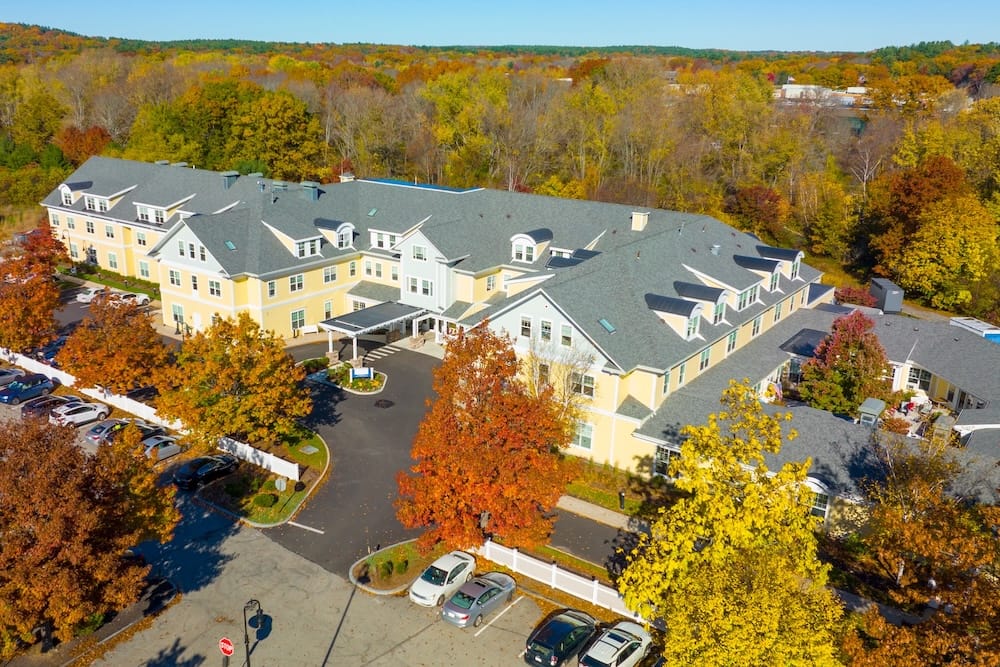
Understanding the Continuing Care Retirement Community Concept
For older Americans planning the next chapter of life, Continuing Care Retirement Communities, often called CCRCs or Life Plan Communities, have become one of the most talked-about housing options. These communities promise something rare in senior living: a single campus where residents can move from independent living to assisted living, memory care, and skilled nursing care without ever having to pack up and relocate again.
A CCRC is designed to offer a full continuum of care in one place, allowing residents to age in familiar surroundings with established friendships and routines intact. The National Institute on Aging describes these communities as offering housing, meals, activities, and varying levels of medical and personal care, all coordinated under one roof or one campus.
How CCRCs Are Structured
Most CCRCs require an upfront entrance fee plus ongoing monthly charges. Entrance fees commonly range from roughly one hundred thousand dollars to more than one million dollars, depending on location, the size of the residence, and the contract type. Monthly fees typically fall between three thousand and six thousand dollars, though high-end communities charge considerably more.
There are generally three contract types families need to understand. Type A, often called a Life Care contract, charges higher upfront and monthly fees but locks in predictable costs even if a resident later needs assisted living or nursing care. Type B, a modified contract, offers a set amount of higher-level care before market rates kick in. Type C, a fee-for-service contract, has lower entry costs but requires residents to pay the full going rate whenever they need additional care.
The Benefits That Draw Residents In
The appeal of CCRCs is straightforward, and for many seniors deeply practical. Residents avoid the wrenching experience of multiple moves as health needs change. Spouses can remain on the same campus even when one needs nursing care and the other does not, a feature families repeatedly cite as priceless.
The National Institute on Aging notes that CCRCs typically provide housekeeping, dining, transportation, fitness centers, social programming, and on-site medical services. For widows, widowers, and couples who no longer want the burden of yard work, home repairs, and household management, the lifestyle is liberating.
- One-time decision instead of repeated moves during health declines
- Built-in social network and structured activities that combat isolation
- Predictable costs under Life Care contracts
- Priority access to higher levels of care on the same campus
- Spouses able to stay close even when care needs differ
The Pitfalls Families Need to Examine
The same features that make CCRCs attractive also create real risks. Consumer advocates and financial planners have long warned that the upfront entrance fee is a major commitment that deserves careful scrutiny. Not all entrance fees are refundable, and refund policies vary widely. Some contracts return ninety percent to a resident's estate, others return a declining percentage over time, and some return nothing after a set period.
Financial stability of the community itself is perhaps the most overlooked risk. A CCRC is essentially a long-term business, and several have filed for bankruptcy over the past two decades, leaving residents fighting to recover entrance fees. Experts recommend reviewing audited financial statements, occupancy rates, and debt levels before signing. Kiplinger and other personal finance outlets have urged prospective residents to ask for at least three to five years of financial disclosures and to have an attorney and accountant review the contract.
Monthly fees also rise. Most contracts allow annual increases, and those increases have outpaced general inflation in some communities. A fixed-income retiree who could comfortably afford the monthly fee at age seventy-five may find it strained at age eighty-five.
Questions Worth Asking Before Signing
Industry guides consistently recommend a thorough due-diligence checklist. The questions below come up repeatedly in published guidance from the National Institute on Aging and consumer finance publications.
- What contract type is offered, and what does it actually cover?
- How much of the entrance fee is refundable, and under what conditions?
- What has been the history of monthly fee increases over the past ten years?
- Is the community accredited by the Commission on Accreditation of Rehabilitation Facilities, known as CARF?
- What are the staff-to-resident ratios in assisted living and skilled nursing?
- What happens financially if a resident outlives their savings?
- Are pets, visiting family, and overnight guests welcome?
Accreditation and Oversight
Only a minority of CCRCs nationwide are accredited by CARF, the leading independent accrediting body for these communities. Accreditation is voluntary but provides an additional layer of review covering finances, governance, and quality of care. State regulation varies dramatically, with some states imposing strict financial reserve requirements and others offering little oversight.
Tax Considerations Many Overlook
A portion of the entrance fee and monthly fees in many CCRCs may qualify as a prepaid medical expense and be deductible on federal income taxes, depending on the contract structure. The Internal Revenue Service has recognized this treatment in past rulings, and tax professionals routinely advise new residents to obtain the community's annual statement showing the deductible portion. For retirees managing required minimum distributions and Social Security taxation, this deduction can be meaningful.
Is a CCRC the Right Fit?
CCRCs are not for everyone. Seniors who prefer to stay in their longtime homes with in-home help, those with strong family caregiving networks, or those whose finances cannot comfortably absorb a six-figure entrance fee may find better options elsewhere. But for healthy, independent older adults who want to make one decision and avoid burdening their children with future placement choices, the model has proven its worth for decades.
The bottom line from the financial press and aging-services experts is consistent: a CCRC can deliver tremendous peace of mind, but only after rigorous homework. Read every page of the contract, study the financials, tour multiple communities, talk with current residents, and bring in independent professionals before writing the check.
Join the American Association of Retired Republicans today!
Dues are $12 per year. Member benefits:
✅ Ad-Free Website Viewing
✅ Advocacy for Republican Seniors
✅ Member Only Newsletters
Dues are $12 per year. Member benefits:
✅ Ad-Free Website Viewing
✅ Advocacy for Republican Seniors
✅ Member Only Newsletters