
News
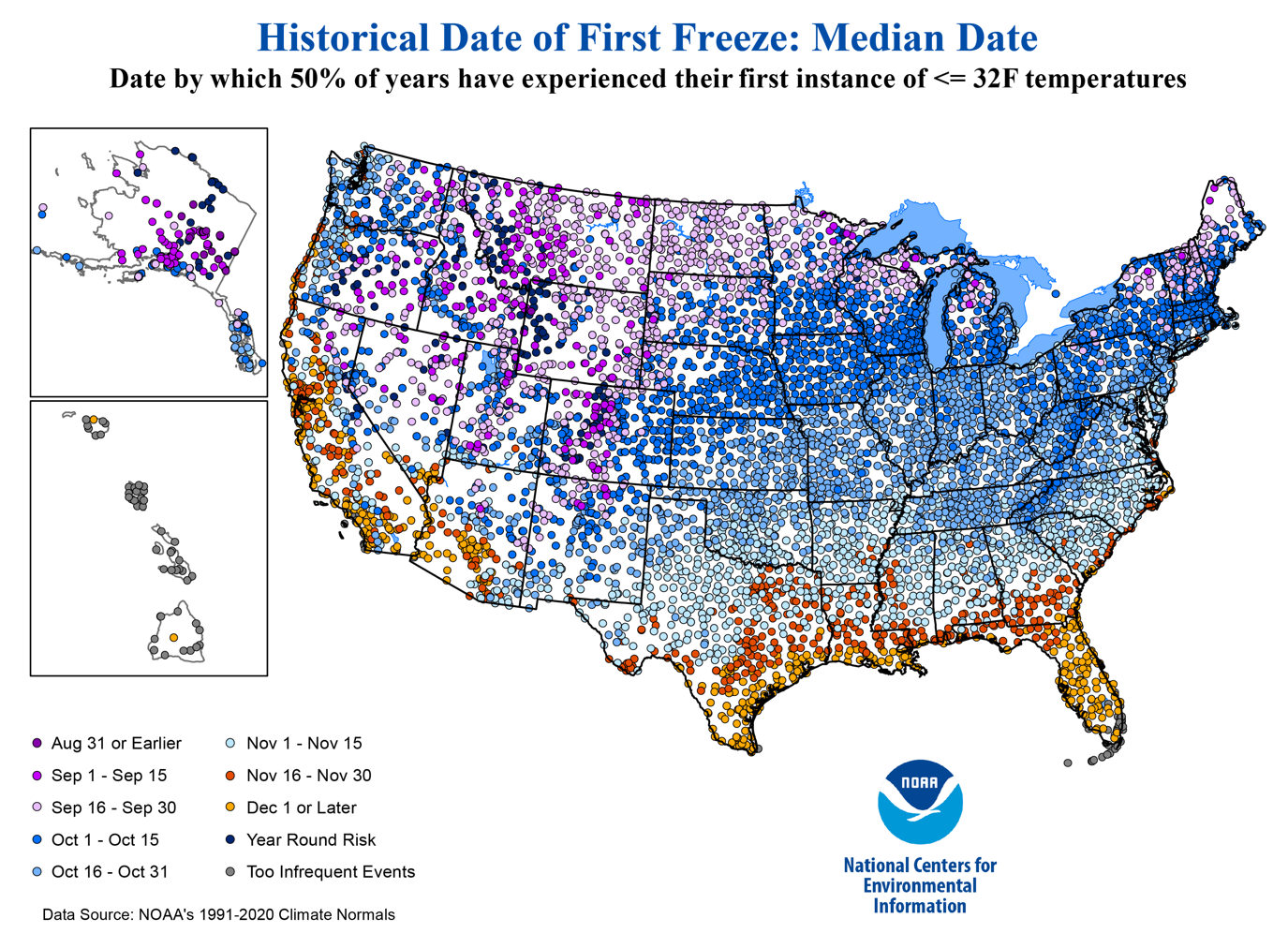
Look up the median first-freeze date where you live, then your USDA hardiness zone. Time covers, harvest, planting, watering, and winter mulch from those two numbers, not from a magazine calendar.
The first freeze is a local night, not a date you can copy from a magazine. It can land a week apart two counties over. Once you have the date for your yard, the rest of the fall work sorts itself: what to cover, what to pull, what to plant while the soil is still warm, and what to leave standing until spring.
NOAA's National Centers for Environmental Information (NCEI) maps that date from the 1991-2020 Climate Normals. A first freeze is 32°F or below over a wide area. On the NCEI freeze maps, the date shown is the median: "a freeze is expected to have happened on or before the listed date in five out of the 10 years recorded." The maps also show the earliest 10 percent and the latest 10 percent, because elevation, shoreline, and city heat all shift the night. Treat the median as a starting point, and watch the National Weather Service frost and freeze watches when a clear, still night is actually coming.
The other number is your zone on the 2023 Plant Hardiness Zone Map from the Agricultural Research Service at the U.S. Department of Agriculture (USDA). The how-to page explains that zones are 10°F bands, split into 5°F half zones, based on the average annual extreme minimum winter temperature from 1991 to 2020. "They are based on the average lowest temperatures, not the lowest ever." A plant that is hardy for your zone can still be hurt if the soil is too dry in late autumn when it tries to go dormant. Wind, how long the cold lasts, and humidity all change the outcome.
What a Cover Can Save Overnight
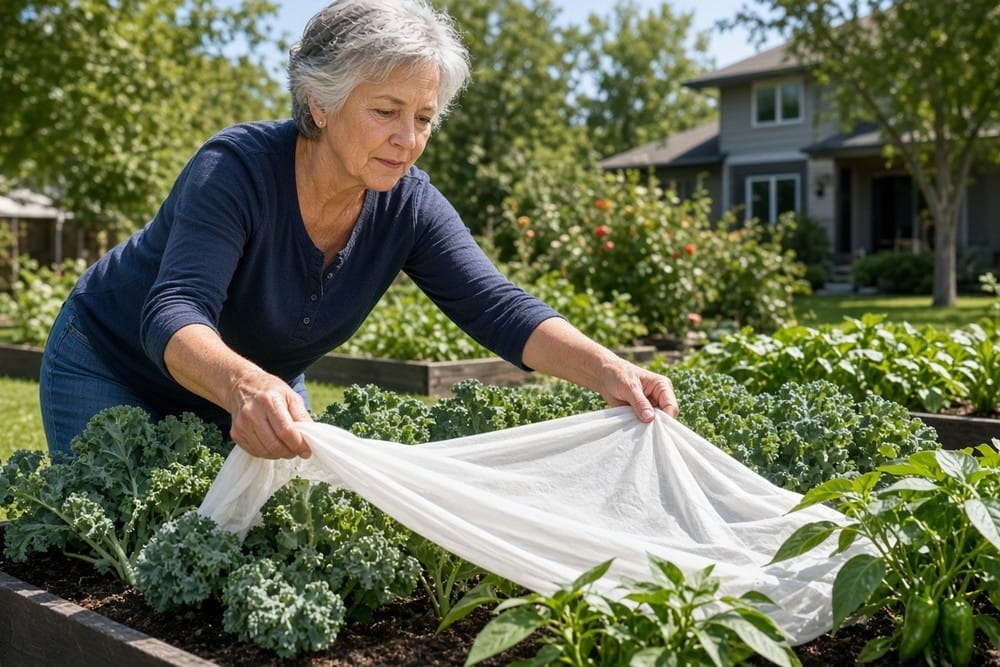
Freeze damage is ice forming inside plant cells. A cover works by trapping heat that is still rising from the soil, so it has to go on before the coldest hour, not after frost is already on the windshield. A light frost that finishes tomatoes and peppers may leave kale, spinach, and collards standing. If you used plastic, take it off in the morning so the sun does not cook what you just saved.
Harvest, Tender Bulbs, and Pots
Bring in the last of the harvest before a hard freeze, then decide what leaves the property. Diseased plants get bagged and trashed. Iowa State University Extension sets the bar at 140°F for a compost pile that can take garden debris; most home piles never get there, which is why that foliage should not go back on the beds. After frost, pull leaves, stems, and leftover fruit from vegetable rows so diseases and insects do not overwinter. Spent annuals come out of beds and pots. Empty and store containers that are not frost-proof so they do not crack. Houseplants and tender container plants come back indoors when nights hold near 50°F.
Dahlias, cannas, caladiums, elephant ears, gladiolus, and tuberous begonias will not survive a freeze in the ground in a cold-winter yard. Dig them after the foliage yellows or frost knocks it down, within a few days rather than weeks. Keep the bulbs from touching each other in storage.
Plant While the Soil Is Warm
Fall is the season to get woody plants in the ground, and the deadline is the ground freezing, not the first frost. Colorado State University Extension (CSU) plants trees and shrubs before the ground freezes, then keeps watering until it does. Evergreens need more lead time than deciduous trees so they are established before winter. Spring-flowering bulbs go in the same stretch, at the depth on the package, and get water after planting. Garlic runs on its own clock; your county office has the week that fits your soil.
Cover crops have a short fall window. Sow most of them from late summer into mid-October so they germinate before a hard frost. Winter rye can go in latest. Oats and forage radish often die on their own in a hard freeze and leave a spring mat. Hairy vetch and crimson clover are the hardy legumes. Cut or turn the stand in spring before it sets seed.
Leave Stems Standing Until Spring
A clean-swept perennial bed is not the goal. Leave stems and seed heads unless the plant was diseased, buggy, or seeding itself where you do not want it. Cut plants that had disease or insect trouble this summer. Leave ornamental grass seed heads for winter interest and birds.
Do not prune woody trees and shrubs in the fall. Iowa State warns that fall cuts push new growth that will not harden before cold sets in. Wait for late winter or early spring.
Hydrangeas are where this trips people up. University of Maryland Extension's hydrangea pruning page splits them by wood. Oakleaf, typical bigleaf, and mountain types bloom on old wood and are pruned right after the flowers fade, not in fall. Smooth and panicle hydrangeas bloom on new wood and wait for late winter or early spring. Either way, avoid cutting close to winter dormancy.
Water, Drain, Wrap, and Mulch
Keep watering new plantings and evergreens until the ground freezes. Evergreen leaves keep losing water after the soil locks up, and the roots cannot replace it. In dry winter regions, water on days above 40°F as needed.
Drain the lines before a hard freeze. CSU's winter checklist blows out sprinkler systems, insulates hose bibs, and takes rain barrels off. Drain and coil hoses, then store them. Clean, sharpen, and oil metal tools before they go in the shed. Wrap trunks on trees under two years old.
A thick mat of wet leaves will kill lawn grass. Mow over them until the pieces drop between the blades. Iowa State adds extra winter mulch, about 4 inches, after the ground freezes, to stop frost heave from shoving crowns out of the soil. Pile it on too early and you delay dormancy. Spread 1.5 to 2 inches of mulched or raked leaves on beds. For plants that are only marginally hardy, cages filled with straw or pine needles, set late and pulled in early spring, beat a heap of leaves, which tend to mat and smother what you meant to protect.
Your local Cooperative Extension office publishes the dates for your county, including the best weeks for lawn fertilizing, seeding, and aeration. Cold-winter yards need a full shutdown. Mild-winter yards need far less of one. The zone map and the freeze map tell you which yard you have.
Join the American Association of Retired Republicans today!
Dues are $12 per year. Member benefits:
✅ Ad-Free Website Viewing
✅ Advocacy for Republican Seniors
✅ Member Only Newsletters
Dues are $12 per year. Member benefits:
✅ Ad-Free Website Viewing
✅ Advocacy for Republican Seniors
✅ Member Only Newsletters