
News
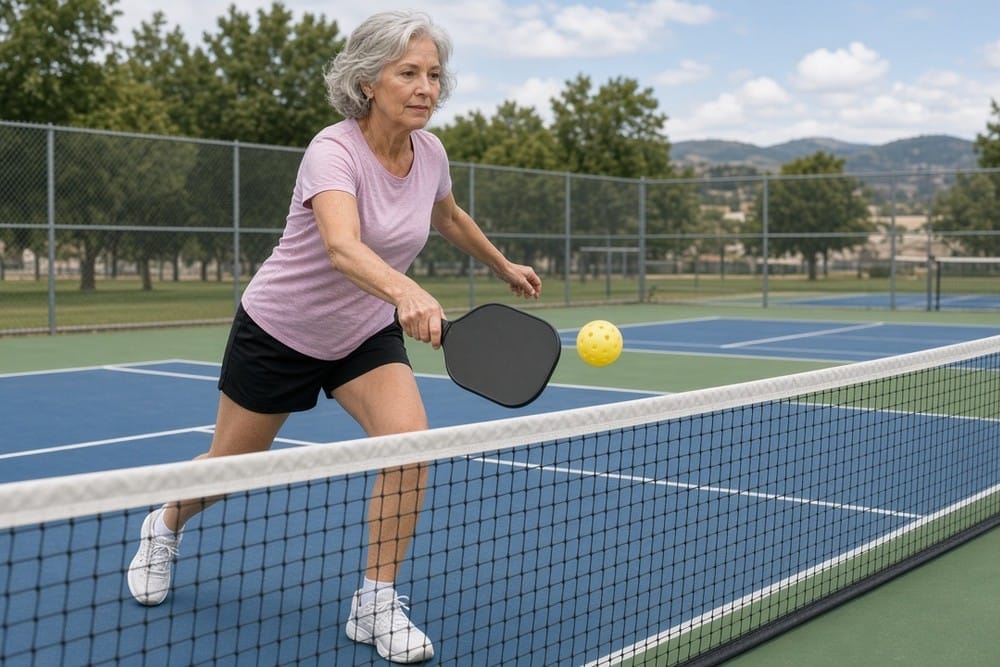
The rec-center gyms and park courts that used to sit quiet after lunch now run paddle rotations until the lights go off. Pickleball, a backyard game from Bainbridge Island, Washington, is the fastest-growing sport in the country, and the people waiting for the next four to come off the court are not all the same age.
Pickleball Reached 24.3 Million Players in 2025
The Sports & Fitness Industry Association reports that 24.3 million people played pickleball in 2025, up from about 4.2 million in 2020. That is a five-year increase of 479 percent. The association counts growth of 171.8 percent from 2022 to 2025 and calls pickleball the fastest-growing sport of the past three years, ahead of pilates training, cardio tennis, and climbing.
Those figures come from the association's Topline Participation Report, built with the Physical Activity Council from about 18,000 annual survey responses covering people ages 6 and older across more than 120 activities. The player mix is 57 percent male and 43 percent female. Participation spans youth, adults 25 to 44, and players 65 and older, which is why a typical open-play rotation looks nothing like a single age group. In a separate study, the association's Pickleball Market Playbook, nearly 94 percent of avid players give physical exercise as a reason they play, followed by fun, competition, and time with other people.
USA Pickleball, the nonprofit national governing body for the sport, reported that its membership passed 100,000 in 2025 and that its national championships in San Diego drew more than 2,500 athletes from 47 states and 20 countries. Its court database listed 15,910 courts at the end of 2024.
Kitchen and Two-Bounce Rules Keep Rallies Long
The playing surface is small on purpose. A pickleball court measures 20 feet wide by 44 feet long for both singles and doubles, the size of a badminton court. The net stands 36 inches high at the sidelines and 34 inches at the center.
Two rules do most of the work in making this game playable for mixed ages and abilities. The first is the 7-foot non-volley zone on each side of the net, 14 feet across the middle of the court, known as the kitchen. A player standing inside that zone, or touching its line, has to let the ball bounce. Volleys are legal only from outside it. USA Pickleball's basics page says that rule is what keeps players from crowding the net and smashing every shot out of the air.
The second is the two-bounce rule. The receiving side must let the serve bounce, and the serving side must let the return bounce, before either team may volley. Both teams start behind the baseline so those bounces can happen. After that, the rally is open. Points are decided by placement and patience more than raw power, and that is a large part of why the sport travels so well across ages.
Serves are underhand, contacted below the waist, and hit diagonally. Only the serving side can score. Recreational games go to 11 points and must be won by 2. Sanctioned tournaments sometimes play to 15 or 21.
How to Get on a Court This Week
To play this week, start at USA Pickleball's Places to Play page. Type in a location and the locator returns nearby courts, scheduled games, groups, and open-play sessions. USA Pickleball says its ambassadors and members help keep locations, schedules, and open-play times current, and that courts are added daily. The directory is free to search. Before driving over, read the listing. Some sites are indoor gyms with set hours. Some are park courts with painted lines and no permanent net. Some charge a fee; some do not.
Open play is the usual doorway for a new player. Paddles go in a rack or a line, the next four take the court, and games turn over quickly. Nobody needs a partner arranged in advance, and doubles is the common format, so a newcomer is never alone out there.
Rec centers, park districts, and clubs run sessions, and many post skill levels such as beginner, 3.0, or advanced. Pick the beginner block first. Rules questions get answered on the spot, and the pace matches someone still learning where to stand.
What You Need to Walk On
A paddle, a ball, and shoes that grip a hard court cover it. Athletic clothing already in the closet is fine. Indoor and outdoor balls differ slightly, so buy the type that matches where you will play. A portable net is useful only if the courts near you have painted lines but no net.
Tournament players must use paddles and balls from the USA Pickleball approved list. Recreational play does not.
A 1965 Backyard Game on Bainbridge Island
The sport began in 1965 on Bainbridge Island, Washington. Joel Pritchard and Bill Bell improvised a game on an old badminton court using ping-pong paddles and a perforated plastic ball. The net started at badminton height of 60 inches and came down to 36 inches. Barney McCallum joined the following weekend.
USA Pickleball's account of the name credits Joan Pritchard, who named the game pickle ball within days of that 1965 invention, after the leftover pickle boats of crew racing. The family dog named Pickles was not born until 1968. The first permanent court went in at the Pritchard home in the Magnolia Bluff neighborhood of Seattle in 1967, and Pickle-Ball Inc. followed in 1972.
The rules have been written down since 1984 and are revised yearly. The 2026 rulebook is the current edition. The 2026 Oceanview USA Pickleball National Championships are set for Oct. 31 through Nov. 8 at the Barnes Tennis Center in San Diego.
Join the American Association of Retired Republicans today!
Dues are $12 per year. Member benefits:
✅ Ad-Free Website Viewing
✅ Advocacy for Republican Seniors
✅ Member Only Newsletters
Dues are $12 per year. Member benefits:
✅ Ad-Free Website Viewing
✅ Advocacy for Republican Seniors
✅ Member Only Newsletters