
News
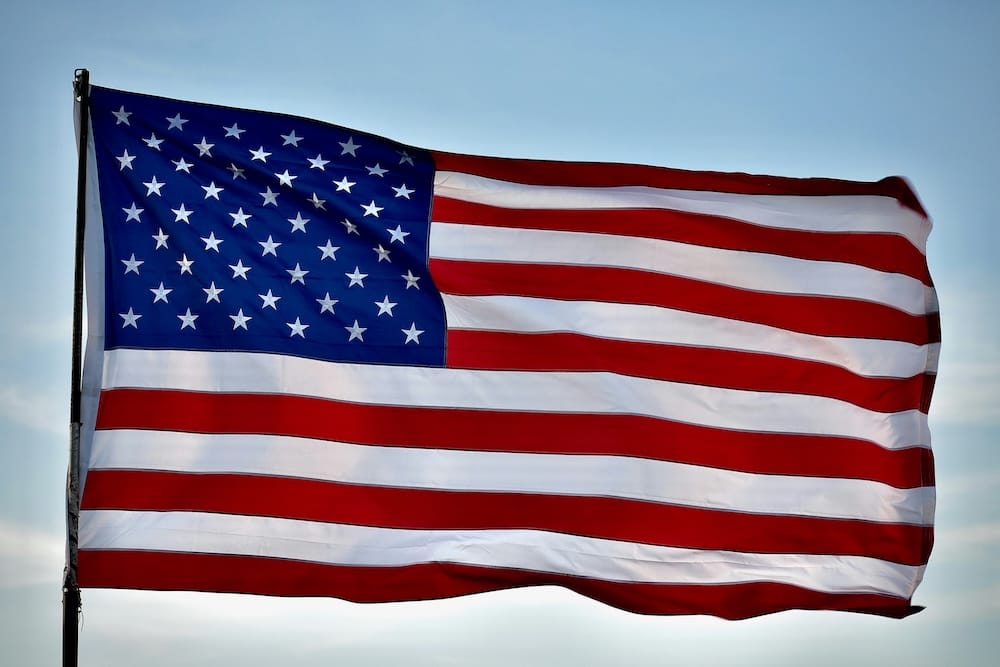
Celebrating the Stars and Stripes on June 14
Flag Day arrives this Sunday, June 14, marking 249 years since the Second Continental Congress adopted the Stars and Stripes as the official banner of the fledgling United States. Across the country, Americans will raise Old Glory on front porches, at town halls, and in public squares to honor a symbol that has waved through revolution, civil war, two world wars, and into the modern era. For millions of households, the day remains a quiet but meaningful reminder of the sacrifices made to preserve the freedoms the flag represents.
While Flag Day is not a federal holiday, it is observed in every state, with parades, ceremonies, and community gatherings that draw veterans, scouts, civic groups, and families together. The town of Quincy, Massachusetts, claims the nation's longest-running Flag Day parade, and Troy, New York, and Three Oaks, Michigan, also stage major annual events that draw thousands of spectators.
The Origins of Flag Day
The story begins on June 14, 1777, when the Continental Congress passed the Flag Resolution. The resolution stated: 'Resolved, that the flag of the thirteen United States be thirteen stripes, alternate red and white; that the union be thirteen stars, white in a blue field, representing a new constellation.' That single sentence gave the young nation its visual identity at a moment when independence from Britain was far from secure.
The idea of formally commemorating the flag's birthday is most often credited to Bernard J. Cigrand, a Wisconsin schoolteacher who in 1885 asked his students at Stony Hill School to observe June 14 as 'Flag Birthday.' Cigrand spent the rest of his life writing essays and giving speeches promoting the observance, earning him the title 'Father of Flag Day.'
President Woodrow Wilson issued a proclamation in 1916 officially establishing June 14 as Flag Day. More than three decades later, on August 3, 1949, President Harry Truman signed an Act of Congress designating June 14 of each year as National Flag Day. Pennsylvania remains the only state to recognize Flag Day as a legal state holiday.
What the Colors and Stars Mean
The current 50-star flag has been in use since July 4, 1960, following the admission of Hawaii as the 50th state. It is the 27th official version of the national flag. The thirteen stripes continue to represent the original thirteen colonies that declared independence from Great Britain.
The meaning of the colors was articulated by Charles Thomson, Secretary of the Continental Congress, when he presented the design of the Great Seal of the United States in 1782. Thomson explained: 'White signifies purity and innocence. Red, hardiness and valour, and Blue... signifies vigilance, perseverance and justice.' Those values remain at the heart of how Americans understand the flag today.
Proper Flag Etiquette Every American Should Know
The United States Flag Code, codified in Title 4 of the U.S. Code, sets out the rules for displaying and handling the flag. While the code carries no penalties for private citizens, it is widely regarded as the standard of respect owed to the national emblem. Veterans organizations, scouting groups, and civic leaders urge families to brush up on the basics before raising the flag this weekend.
Key points of flag etiquette include the following:
- The flag should be displayed from sunrise to sunset on buildings and stationary flagstaffs in the open. If displayed at night, it should be illuminated.
- The flag should not be displayed in inclement weather unless it is an all-weather flag.
- When hoisted, the flag should be raised briskly and lowered ceremoniously.
- The flag should never touch the ground, the floor, water, or merchandise.
- The flag should never be used as apparel, bedding, or drapery, and should never be used for advertising purposes.
- When the flag is in such condition that it is no longer a fitting emblem for display, it should be destroyed in a dignified way, preferably by burning.
- When displayed with flags of states, communities, or societies on separate flagpoles of the same height, the flag of the United States should always be hoisted first and lowered last.
- During the playing of the National Anthem or the Pledge of Allegiance, citizens should stand at attention with the right hand over the heart. Men not in uniform should remove their hats.
The Flag Code also addresses half-staff observances. The flag is flown at half-staff by presidential proclamation, typically to honor the death of national figures, fallen service members, or victims of tragedy. On Memorial Day, the flag is flown at half-staff until noon and then raised to full staff for the remainder of the day.
How Communities Are Marking the Day in 2026
National Flag Day Foundation events in Baltimore, the city where Francis Scott Key witnessed the bombardment of Fort McHenry that inspired the National Anthem, traditionally include a 'Pause for the Pledge of Allegiance' at 7 p.m. Eastern Time. Americans across all time zones are encouraged to stop and recite the Pledge together, a unifying moment first authorized by Congress in 1985.
Veterans of Foreign Wars and American Legion posts will hold flag retirement ceremonies, in which worn flags are respectfully burned. Families with old or damaged flags are welcome to drop them off at local posts for proper disposal rather than placing them in the trash.
Flag Day also kicks off National Flag Week, during which the President typically issues a proclamation urging citizens to display the flag throughout the week. The observance dovetails into other patriotic milestones in June, including the United States Army's birthday, also celebrated on June 14, marking 251 years since the Continental Army was established in 1775.
A Tradition Worth Preserving
For older Americans who grew up reciting the Pledge of Allegiance in classrooms each morning, Flag Day carries a personal resonance that no act of Congress can fully capture. It is a moment to step out on the porch, run the flag up the pole, and remember the generations who served beneath it. Whether the observance is a small family gesture or a large community parade, the message remains the same: the Stars and Stripes still stand for something worth honoring.
Join the American Association of Retired Republicans today!
Dues are $12 per year. Member benefits:
✅ Ad-Free Website Viewing
✅ Advocacy for Republican Seniors
✅ Member Only Newsletters
Dues are $12 per year. Member benefits:
✅ Ad-Free Website Viewing
✅ Advocacy for Republican Seniors
✅ Member Only Newsletters